01
Connect a compatible PBX
Use SIP Trunks with a suitable on-site or hosted phone system. We check SIP support, software requirements and the configuration needed for incoming and outgoing calls.
 My Business
SIP Trunks connect a compatible business phone system to telephone services over an IP connection. MBC helps you plan numbers, simultaneous calls and connectivity around the system you already use or the deployment you are building.
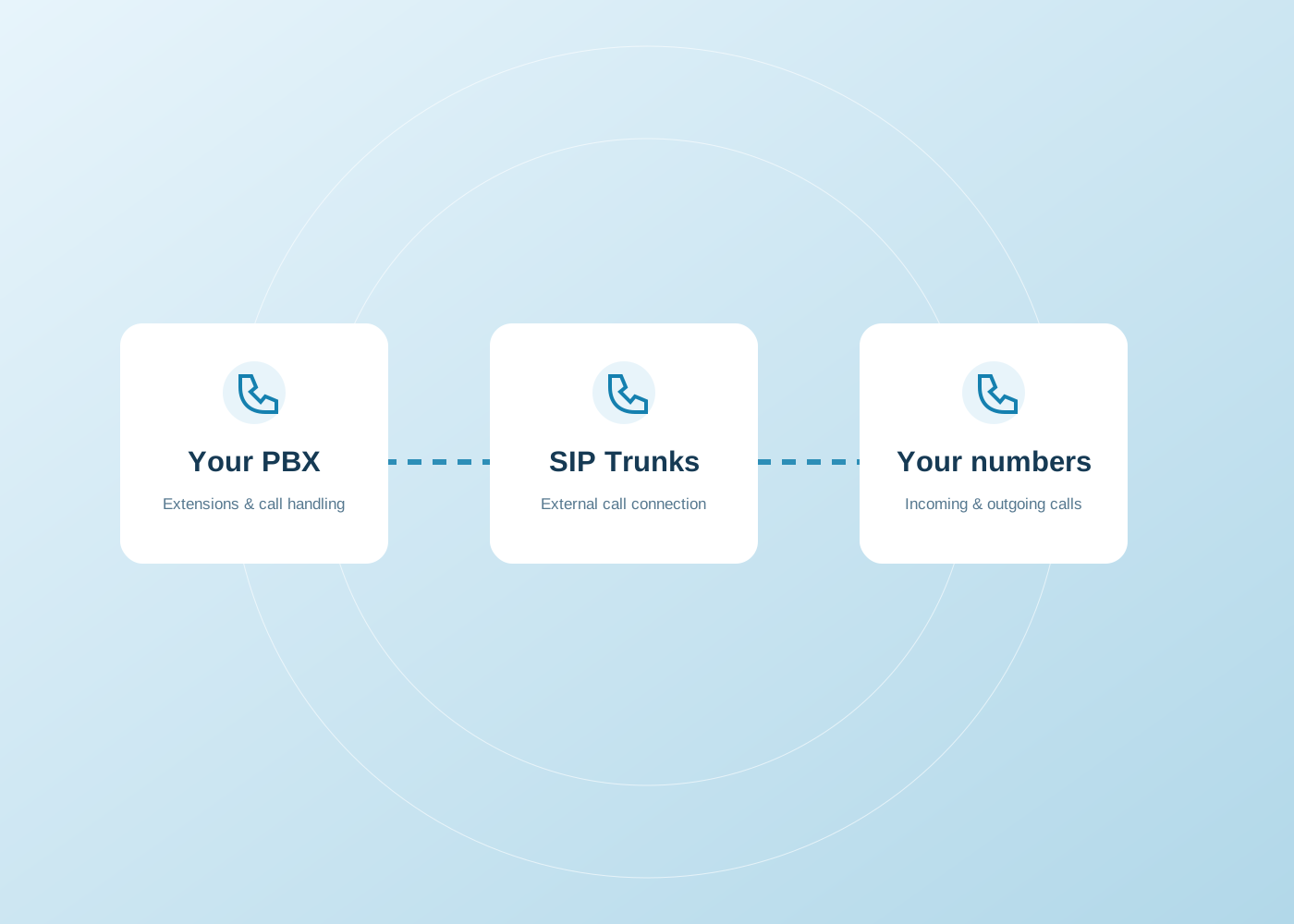
A SIP trunk provides the calling connection; your PBX provides the extensions and call handling. We review both sides together, including the existing system, broadband connection, number requirements and expected call demand, before agreeing the service and configuration.
Use SIP Trunks with a suitable on-site or hosted phone system. We check SIP support, software requirements and the configuration needed for incoming and outgoing calls.
Plan the number of concurrent calls your business needs. Trunk capacity and extension counts are different: several extensions can share agreed external calling capacity.
Discuss new numbers, direct-dial ranges and keeping eligible existing numbers. Porting is checked and planned with the current service details before a changeover is confirmed.
Review incoming destinations, permitted caller IDs and available diversion or alternative-routing options. Any resilience arrangement depends on the service, system and connectivity agreed.
We assess the PBX, router, firewall and network path together, then agree the trunk setup and number routing. Suitable connectivity and correct configuration matter for call quality. Testing covers inbound and outbound calls, caller ID, audio and agreed routing. Your proposal confirms call capacity, destinations, charges, compatibility and support responsibilities.
No. A SIP trunk provides the external calling connection for a compatible PBX. A hosted phone system also provides features such as extensions, menus and queues. We can help you decide which arrangement fits your business.
Eligible numbers may be retained through a planned port. We check the current provider, account details and any linked services before confirming what can move and agreeing the changeover.
Not necessarily. Capacity is planned around simultaneous external calls, which can differ from the number of extensions. We review busy periods and call demand when agreeing the service.
That depends on the PBX model, software, SIP compatibility and configuration. We review these details before recommending or provisioning a service.
The connection needs suitable capacity, quality and configuration for the expected call traffic. A shared or dedicated service can be discussed after reviewing the site and requirements.
Available diversion and alternative-routing options can be considered as part of the design. We confirm what is supported and how it behaves; backup routing is not assumed to be included automatically.
The quotation sets out the agreed capacity, number charges, calling rates or allowances and any additional options. These are confirmed for your business before an order is placed.
Tell us about your people, premises and priorities. We’ll help you find the right fit.